

“Removable” is a word a marketing team chose, not a promise the adhesive keeps. I spent nine years running move-out inspections, and the label on the box never once settled a dispute — the wall underneath did. That gap is where most renter-friendly accent wall ideas go wrong. Renters read “peel-and-stick” as “consequence-free,” then learn at handover that a few of these products damage the very surface they promised to protect.
TL;DR
- Peel-and-stick wallpaper is reversible with minor touch-up on painted satin, semi-gloss or eggshell drywall; however, flat paint, smooth walls and 3-plus years up are what pull paint on removal.
- Tension-rod and industrial-Velcro fabric walls are the only fully reversible option here — they leave nothing behind and need no landlord permission.
- Budget vinyl covers a full accent wall for about $88–$195 and a linen fabric wall runs roughly $72–$273; either way, test a swatch in a hidden corner for a full week first.
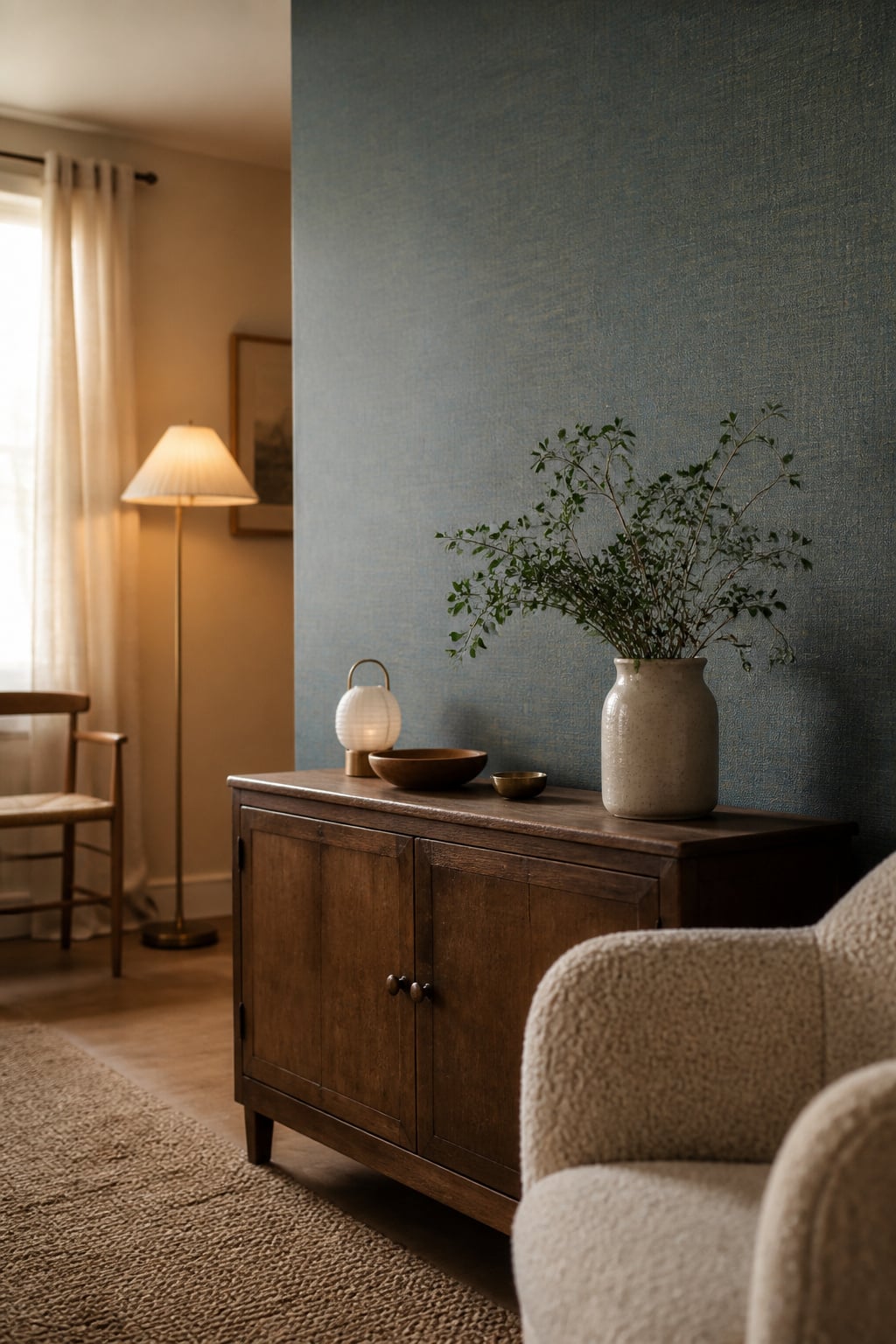
So this guide sorts them honestly. By the end you’ll know which method — wallpaper, panelling, or fabric — comes off clean on your wall, and which ones need a landlord’s written yes first.
Why ‘Renter-Friendly’ Accent Wall Ideas Aren’t Automatically Deposit-Safe
The tenant who lost $850 to ‘removable’ wallpaper
The worst wallpaper bill I ever itemized came to $850. The paper was sold as removable; after three years on a flat-painted wall, it came away in strips and took a patch of the wall’s skim coat with it. That was the exception, though. Most removals stay minor: one documented case had paper up three years leave a single 3–4 inch patch, a sub-$10 spackle job, well short of the $624 a professional repaint averages. Still, nearly 30% of renters lose part of their money back to preventable damage, and accent walls are a common source.
What actually gets flagged at a move-out inspection
Here’s the line every inspection draws. A mark you can fix with a normal repaint is wear and tear, not deductible. Damage needing more than paint — drywall pulled off, a gouge to patch first — is billable. Painting itself is legally an alteration needing consent, which is why paint-free methods start in a safer category from day one.
The three-tier reversibility scale used throughout this guide
I rate every method on the same three-tier scale, so you can place any accent wall idea before you buy it.
| Tier | What it means | Methods | Landlord ask |
|---|---|---|---|
| 1 | Fully reversible, nothing left behind | Tension-rod and Velcro fabric on clean, smooth paint | None |
| 2 | Reversible with minor touch-up | Peel-and-stick wallpaper, Command-strip panels on painted, non-flat drywall | Usually none |
| 3 | Removal risk is unpredictable | Drilled anchors, heavy permanent adhesive, porous or unpainted surfaces | Written consent first |
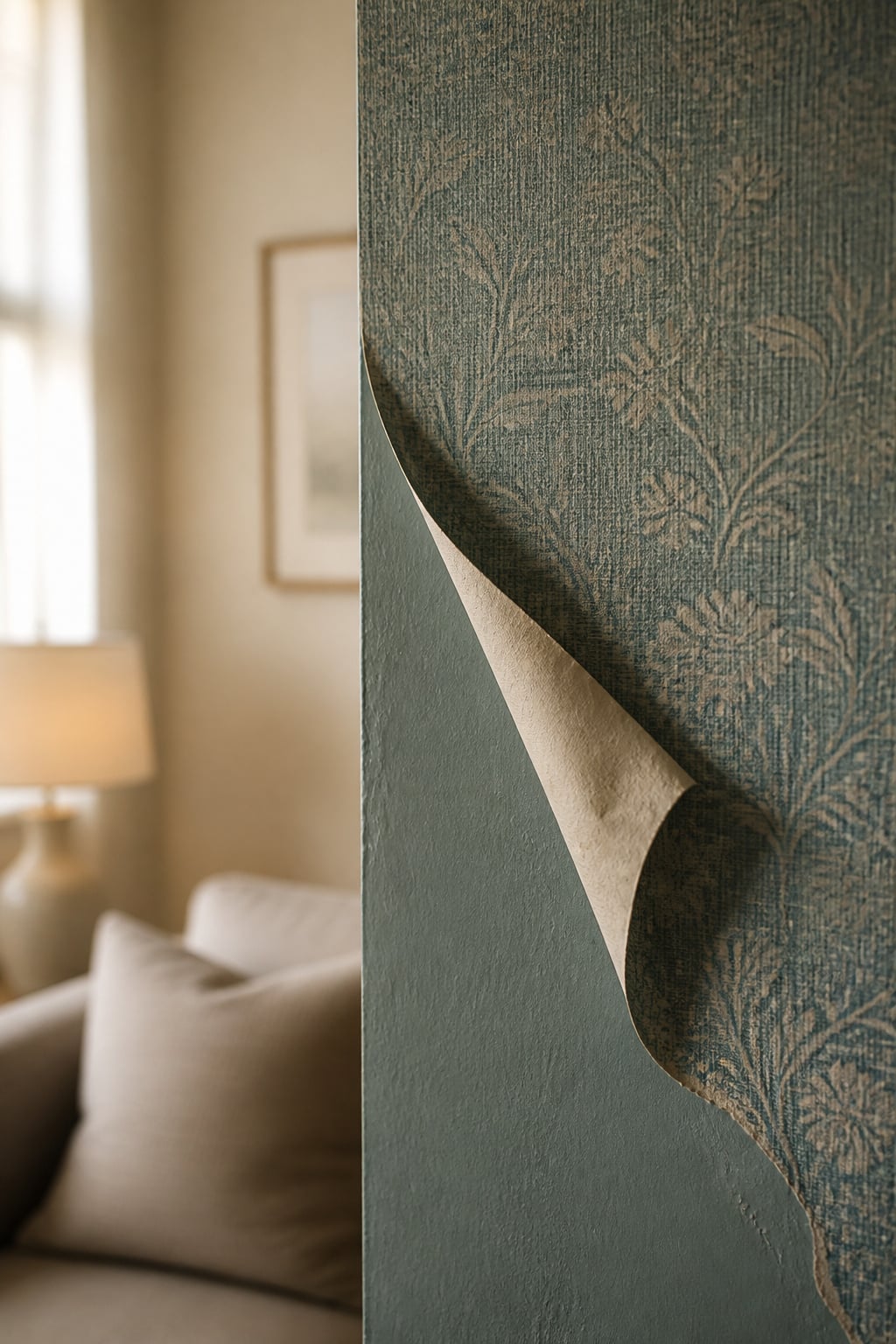
Peel-and-Stick Wallpaper, Honestly Reviewed
Removal risk isn’t luck. It’s three factors: paint sheen, wall texture, and how long the paper stays up.
Which adhesives pull paint on removal
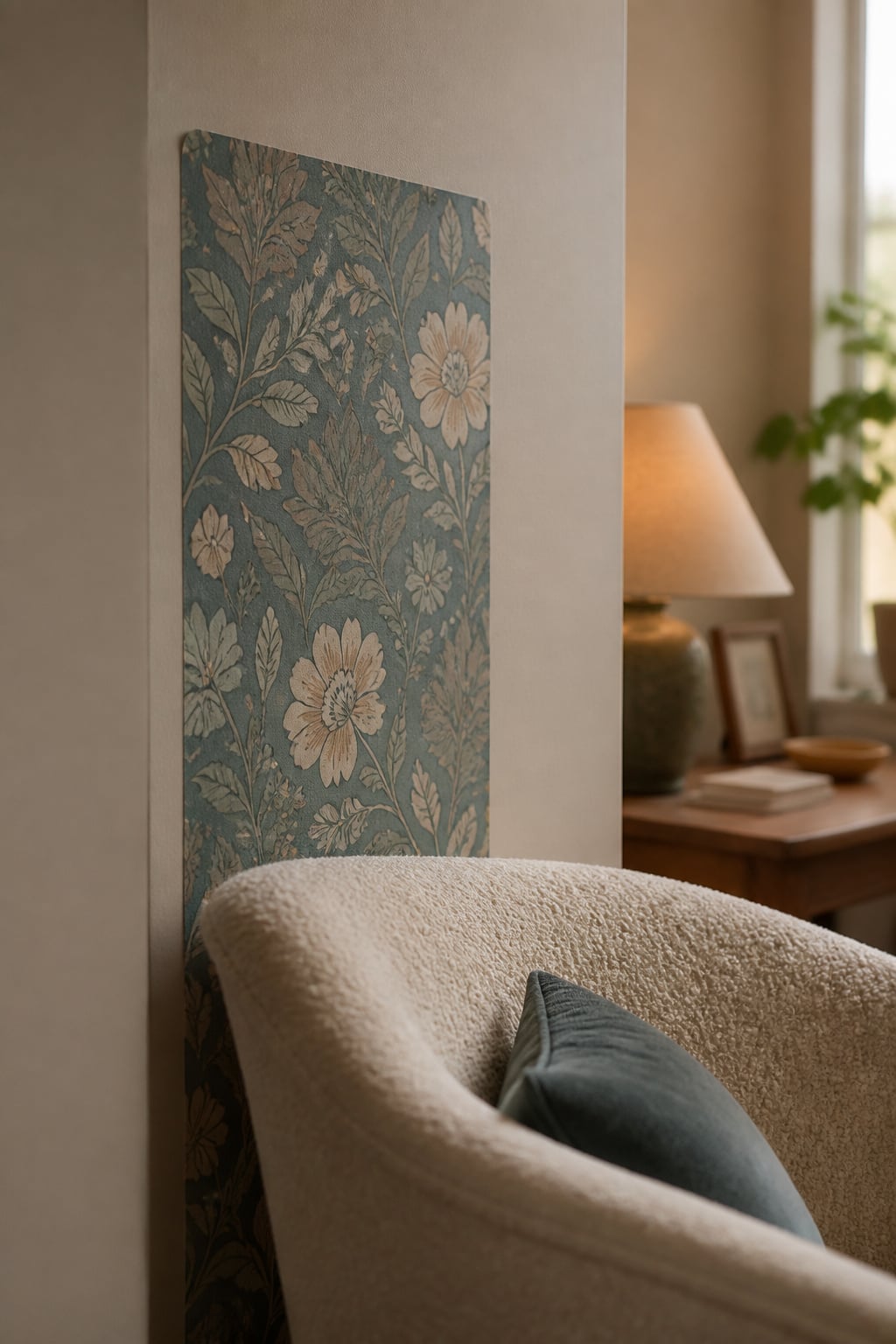
Flat and matte paint pulls worst, and dwell time makes it worse once you pass three years. Here’s the counterintuitive part: perfectly smooth walls pull paint more often than lightly textured ones, and glossier sheens release cleaner. One more trap is timing — paper hung 22 days after a repaint, before the 30-day cure, once pulled a quarter-size chip.
Wall prep that protects the surface underneath
Prep starts weeks ahead. Wait at least 30 days after any repaint, because uncured paint grips the adhesive too hard and off-gasses into bubbles. Then wipe the wall dust-free — invisible dust stops the adhesive bonding to the paint, so the paper sticks to dust and peels early. Zero- and low-VOC eco-paints add risk too, forming a barrier the adhesive can’t grip.
Best surfaces and finishes for a clean removal
Painted drywall in semi-gloss, satin or eggshell is the most reliable removal surface documented; Tempaper’s own guidance rules out flat and textured walls. The most detailed tester record I’ve found — Megan at The Homes I Have Made, across a dozen-plus removed walls — reports it never pulls chunks of drywall; damage stays in the top paint layer. Technique lowers the risk either way:
- Warm the paper with a hair dryer about 5 inches from the wall to soften the adhesive.
- Peel from the top down at a 180-degree angle, folding the paper back on itself.
- Go slowly, one section at a time — peeling fast is the biggest cause of pulled paint.
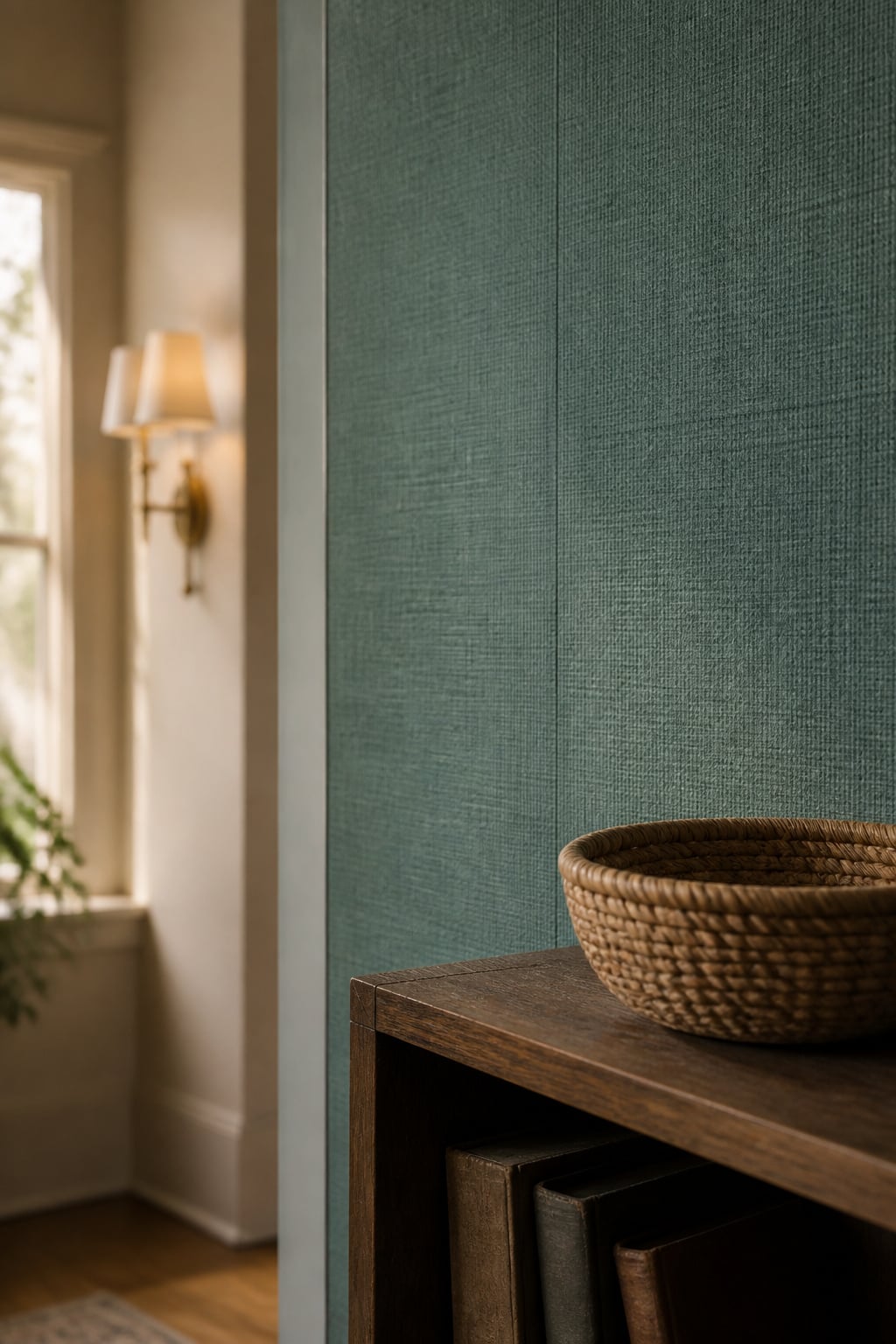
Removable Panelling and Batten Walls
Here’s where I get nervous for renters: “peel-and-stick” on a wood-panel box does far more marketing work than on wallpaper, and I’ve watched the adhesive win.
Command-strip and adhesive-mount panel systems
Start with what the adhesive holds. 3M’s FAQ says Command sticks to painted, stained or varnished wood, glass, tile, painted cinder block, metal and painted wallboard — but not brick, wallpaper, or rough-sawn wood. The strips are rated by line, from 1 lb for small up to 20 lb for X-Large. Take this from me, not the packaging: wood-panel adhesive is often built to hold heavy planks for years, so removal can lift drywall paper with it. Test the real product, not the box.
Weight and size limits before you need real anchors
A bare screw in drywall holds only about 5 lb before the gypsum crumbles. Anchors buy more — self-drilling threaded 25–75 lb, wing toggle 75–150 lb — but that printed shear rating drops 30–50% for the outward pull a leaning panel applies. My working rule: once a panel plus whatever hangs on it tops roughly 25–30 lb, no-drill mounts stop being reliable and you’re into stud-anchored, Tier 3 territory.
What a landlord will and won’t notice
A couple of small holes read as wear; anything wider than a pin turns billable. The two things an inspection flags hardest on a panel job are adhesive residue and drywall-paper tear-out — both avoidable with the heat-and-slow-peel you’d use on wallpaper. If your wall statement is really about the objects on it rather than the surface, a damage-free gallery wall skips the adhesive-panel risk entirely.
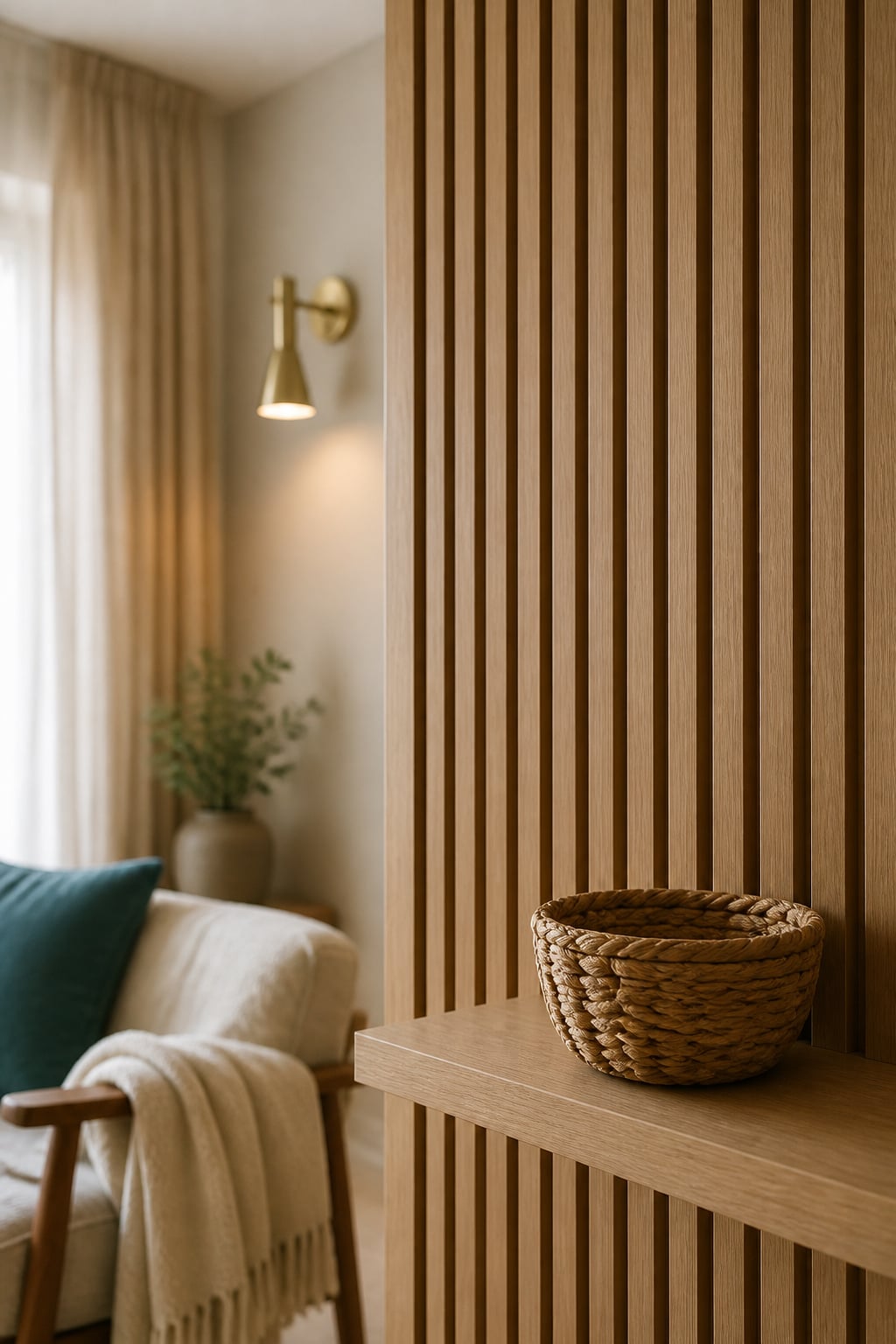
Fabric and Tapestry Walls for Instant Texture
This is the method I’d hang in my own rental — mounted right, fabric is the one fully reversible option here.
Tension-rod and Velcro-mount fabric methods
Floor-to-ceiling tension rods sold as room dividers run $25–$40, adjust 4–10 ft tall, and hold up to 45 lb of curtain-weight fabric — far past a closet rod’s 5–10 lb, with no drilling. For lighter mounting, industrial Velcro supports up to 4 kg (about 8.8 lb) per 10 cm strip on a smooth surface. Keep Velcro and Command adhesive out of kitchens, bathrooms and heat, where the bond softens.
Fabric weights that hang flat versus sag
Weight decides whether it hangs flat or sags. The sweet spot is a medium-weight cotton, linen or polyester blend at 6–10 oz, roughly 200–340 GSM; fabric over 12 oz holds its shape but needs a stronger top anchor. For the flattest hang, sew a rod pocket top and bottom and tension the panel between two rods.
Cost per wall compared to wallpaper
Priced with real yardage, fabric competes. Drapery-weight linen runs $7.98–$30.35 a yard, and a 9×12 ft wall needs about 9 yards of 54-inch fabric for roughly $72–$273.
| Method | Full accent wall | Reversibility |
|---|---|---|
| Budget peel-and-stick vinyl | $88–$195 | Tier 2 |
| Premium wallpaper | $300–$750+ | Tier 2 |
| Tension-rod linen fabric wall | $72–$273 | Tier 1 |
One caution: glued-down fabric wall covering is a homeowner’s 15–25-year install, not this. Its permanence is exactly why it isn’t for you.

Testing Before You Commit to a Full Wall
How do you know a product will behave before you commit a whole wall to it? You test it — one small piece, held a full week.
The hidden-corner adhesion test
Put a real piece of the actual product — a wallpaper swatch, a panel offcut, a Velcro or Command strip — somewhere it won’t show: behind a door, behind furniture, inside a closet. The spot has to match the target wall in paint sheen, age and texture, because a test on a different wall tells you nothing.
How long to wait before judging a bond
Standard guidance is 24–48 hours before you peel a sample back. For a rental, give it a full week — the extra days reveal how the paint responds over time. Then peel slowly and check underneath; if paint lifts with the product, that wall isn’t a candidate for a full install without more prep.
Signs a product will fail before move-out
Watch for edge curling in the first days or weeks; edges lifting early signal a mismatch between adhesive and surface and predict full failure before your lease ends. Early lifting traces to the surface, not a defect, and only gets worse. High humidity accelerates every adhesive method here.
Getting Written Permission for the Options That Need It
A two-line email has saved more security deposits than any “removable” product on the shelf. It isn’t the timid option — it’s the one that holds up when a dispute starts.
The exact ask-your-landlord script
Keep it short, specific, and in writing — email or a letter, never just a hallway chat, because the point is a paper trail of what got approved.
“I’m requesting approval to [describe the specific change] at [address]. I’ll cover the full cost myself, and I’ll restore the wall to its original condition at my own expense before I move out. May I have your written OK to go ahead?”
The restoration offer is usually the sentence that turns a hesitant landlord to yes. Include scope, materials and timeline, and expect a standard 14–30 day response window.
Which accent wall methods need consent versus which don’t
Sort by tier. Painting is legally an alteration that needs written consent, so any painted alternative requires the ask. Tier 1 methods — a tension rod, Velcro on clean paint — leave the wall unaltered and generally don’t. Tier 3 methods — panel adhesive rated for years, anything on drilled anchors — should get written sign-off. Read your lease first, though; many already ban alterations without consent. Wallpaper is just one move in a whole reversible room — the same tier logic runs through every one of these rental living room ideas, right down to how you cover an ugly rental floor.
What to photograph before and after
Photograph the wall before you start and again the moment you finish — wide shots of the room, close-ups of wall, floor and ceiling, all date-stamped. This isn’t just my habit: California’s AB 2801 now requires landlords to photograph a unit at move-in and move-out and share those photos with the tenant — a standard worth holding yourself to everywhere. Email copies as you take them; a record made in the moment is far harder to dispute.
So here’s your move-out-proof first step: check your wall’s paint sheen, match it to the right method and tier, and test a hidden corner for a full week. When the swatch peels back clean, you’ll know the wall is safe to cover — and whether that email needs to go out first.
FAQ
How long does peel-and-stick wallpaper last before it starts peeling?
Budget and thin-paper products last 1–3 years, mid-range products 3–5 years, and top-tier stabilized-acrylic-adhesive papers 5–7-plus years in a living room (2–4 years in a humid bathroom or kitchen). Remember that dwell time cuts both ways: the longer a paper stays up past three years, the more likely removal pulls a little paint with it.
Can you put peel-and-stick wallpaper over textured walls?
Manufacturer guidance (Tempaper) advises against textured walls, and where attempted demands a smooth, clean, primed surface in semi-gloss, satin or eggshell. In one five-month test of twelve papers on an orange-peel wall, six held, two loosened but stayed, and four fell off — so light texture is workable if you test first, but heavy stucco is not.
Do Command strips work on all wall types for panelling?
No. 3M’s own FAQ says Command sticks to painted, stained or varnished wood, glass, tile, painted cinder block, metal and painted wallboard, but not brick, wallpaper, or rough-sawn or unfinished wood. Heavy texture also cuts holding strength by 30–40%, so a panel on a textured rental wall needs a lighter panel or a different mounting method.